Reel in Attention: Designing with the Fishing SVG Font
In the world of graphic design, typography is rarely just about the letters on the page; it is about the texture, the mood, and the story those letters tell. If you are working on a project that involves the great outdoors, particularly angling or aquatic themes, finding a typeface that captures the essence of the sport without looking generic can be a challenge. Enter the Fishing typeface, a creative SVG font that brings the water to you. This isn't your standard blocky text or elegant script; it is a bold, illustrative display font where the anatomy of every letterform is infused with fishing equipment and marine life.
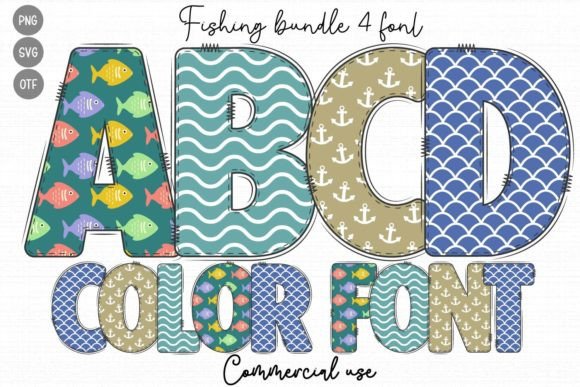
The immediate visual impact of Fishing is undeniable. Because it is an OpenType-SVG color font, it preserves the rich detail, gradients, and textures of hand-drawn artwork directly within the font file. When you type, you aren't just generating black vector outlines; you are stamping down colorful illustrations of lures, hooks, sinkers, and fish scales. This gives the typeface a personality that feels rugged, adventurous, and authentic. It possesses the weight and presence of a heavy serif font or a slab typeface, but with a playful, artistic edge that standard fonts simply cannot replicate. For designers and crafters, this means you can achieve a complex, illustrated look in seconds, rather than spending hours manually tracing vector assets.
Practical Applications: Beyond the Desktop Screen
Understanding where a specialized asset like this fits into your workflow is key to maximizing its value. Because Fishing is a decorative display font, it is rarely the right choice for body copy or long-form reading. Instead, it shines brightest in short bursts where impact is the priority. Think of it as the "hero" element of your layout. For small business owners in the outdoor industry, this typeface is a game-changer for logo design. It instantly communicates a niche focus—whether you run a charter boat service, a bait and tackle shop, or a lifestyle brand centered on the outdoors.
For the crafting community, specifically those utilizing cutting machines and design software, the utility of Fishing extends to physical products. It is a fantastic choice for apparel design, particularly for t-shirts, hoodies, and hats sold at tournaments or tourist shops. The bold nature of the letters ensures that the design remains legible even when printed on textured fabrics. Furthermore, it translates beautifully onto hard goods. Imagine the appeal of a coffee mug, a tumbler, or a decal for a tackle box featuring a personalized name or a catchy phrase written in this font. The visual texture of the letters mimics the complexity of hand-painted art, adding perceived value to the finished product.
Digital marketers and content creators can also leverage this asset for social media graphics and web headers. In a scroll-heavy environment, standard sans-serif fonts often blend into the background. A title set in Fishing, however, acts as a visual anchor. It is perfect for YouTube thumbnails, Instagram stories promoting a sale, or blog headers for articles reviewing gear. When used in editorial design, such as a magazine layout or a digital flyer, it sets a thematic tone immediately, letting the reader know exactly what content to expect before they read a single sentence of the body text.
Technical Nuances and Design Strategy
While the aesthetic appeal is high, working with an OpenType-SVG font requires a specific technical understanding. The most critical factor to note is software compatibility. Fishing is compatible with professional design suites like Adobe Photoshop, Adobe Illustrator, and Silhouette Studio, as well as open-source alternatives like Inkscape. However, it is essential to acknowledge the limitations regarding cutting machine hardware. As noted in the product specifications, the OTF or TTF files of this product are generally not compatible with Cricut machines for direct cutting. This is because Cricut Design Space often strips away the SVG data required to render the color and detail, reducing the font to a standard outline or failing to import it entirely.
For Cricut users who wish to utilize this style, the workaround involves creating your text or design in a compatible program like Photoshop or Illustrator, and then exporting the text as a flattened PNG or a Print Then Cut image. While this adds a step to the workflow, it preserves the integrity of the design. Silhouette users generally have a smoother experience, as the software supports the OpenType-SVG format more natively, allowing for real-time editing of the colored text.
From a design strategy perspective, choosing Fishing means accepting that it is a "loud" typeface. It demands attention. Therefore, visual hierarchy becomes crucial. If you pair this font with another typeface, you need contrast. A clean, modern sans-serif font works exceptionally well as a secondary typeface for dates, locations, or detailed information. This creates a balance between the illustrative, artistic nature of the header font and the functional clarity of the supporting text. Avoid pairing it with other decorative or handwritten fonts, as this will result in visual clutter that confuses the viewer.
Evaluating Fit and Professional Polish
Before committing to Fishing for a commercial project, it is worth conducting a "squint test." Step back from your screen and squint at the layout. Does the text remain recognizable as a shape, or does it dissolve into a noisy texture? Because the font features intricate details like fish scales and metallic lure finishes, it works best at larger sizes. If you attempt to use it for small subheadings or captions, the details will muddy, and the text may become illegible. This is a common pitfall with high-detail display fonts; they are designed for scale.
Licensing is another area where professionals must tread carefully. If you are a hobbyist making a gift for a friend, personal use covers you. However, if you are a small business owner selling mugs on Etsy, a graphic designer creating a logo for a client, or a publisher designing a book cover, you need to ensure you have the appropriate commercial license. The Fishing font is a premium asset, and using it in products for sale typically requires a commercial license. Always review the specific terms provided by the foundry to ensure your usage is compliant, protecting both your business and the intellectual property of the creator.
Ultimately, Fishing is more than just a set of letters; it is a thematic toolkit. It allows you to inject personality and narrative into your designs instantly. Whether you are crafting a brand identity for a new outdoor startup, designing merchandise for a local fishing derby, or creating digital assets for a nature blog, this typeface provides a bold, creative solution. By respecting its technical requirements and using it strategically within your visual hierarchy, you can create professional, engaging designs that truly hook your audience.